
CARE GUIDE
Training Clothes Between the Session and the Wash
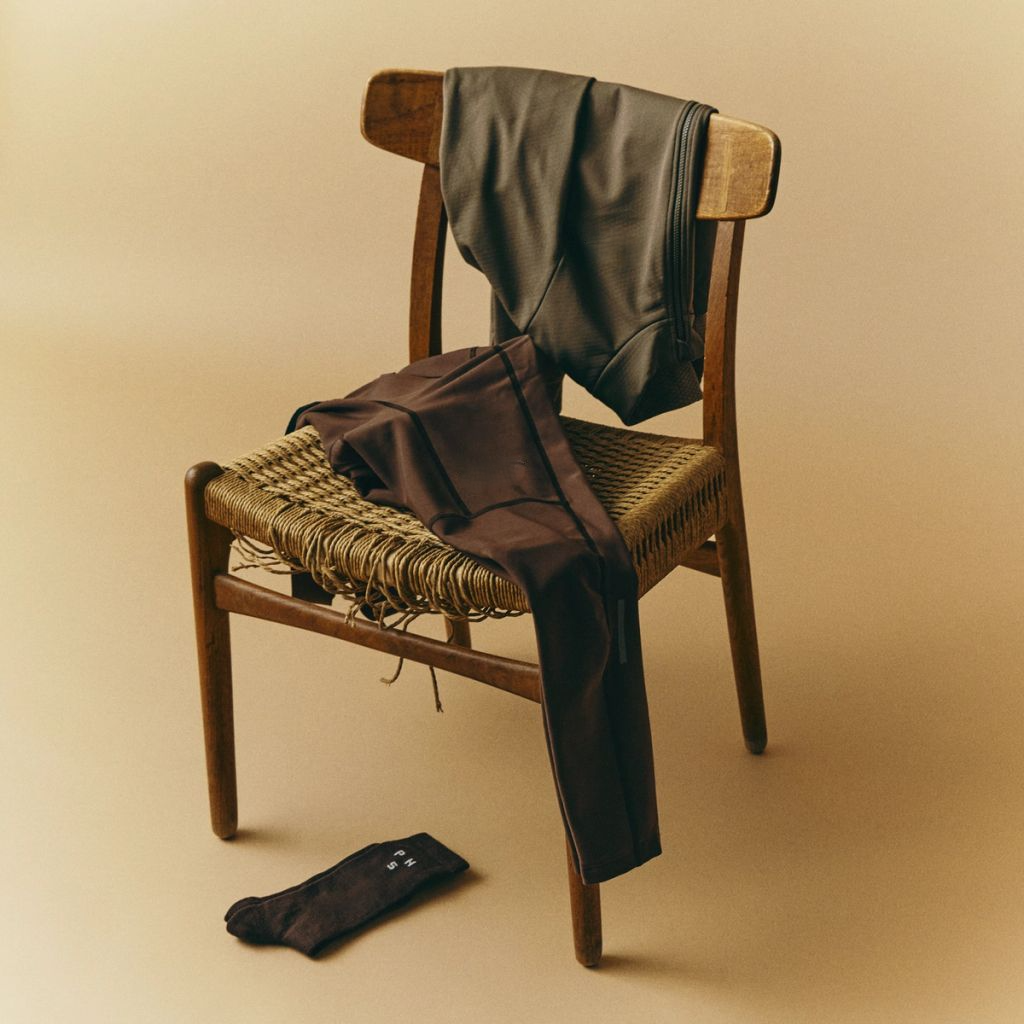
The few hours after a session decide more than the wash cycle does.
Most advice about looking after training clothes starts at the washing machine. That is the wrong end of the problem. By the time a top reaches the drum, the damage that shortens its life has usually already happened, in the four to twelve hours it spent screwed into a ball at the bottom of a bag.
Synthetic knits hold moisture in the spaces between fibers rather than inside them. Sealed in a bag with no airflow, that moisture sits at body temperature and feeds the bacteria that produce the smell people blame on the fabric. The smell is not really in the fabric at all until it has had those hours to establish itself, at which point a normal wash often will not shift it.
Unpack the Bag Before You Sit Down
The single most useful habit is emptying the bag as soon as you get home, before food, before a shower, before anything. Shake each piece out and hang it over the back of a chair, a door, or a rail. It does not need to dry completely and it does not need to go anywhere clever. It needs airflow on both faces of the fabric for an hour or two.
If the wash is not happening tonight, that airing step is doing all the work. A top that has dried out flat will go into a wash two days later and come out clean. A top that stayed damp and compressed for two days may not.
Rinse, Air, or Wash
Not every session needs a full wash. A light session that produced very little sweat leaves a garment that can be aired and worn again. A heavy session goes straight to the wash. Anything in between benefits from a cold rinse in the sink, wrung gently rather than twisted, then hung to dry.
Twisting is worth avoiding specifically. Elastane loses recovery when it is stretched hard while wet, and a wrung waistband is exactly that. Press the water out between your palms or roll the garment in a towel instead.
What to Skip
Fabric softener coats fibers with a thin film. On a cotton towel that feels pleasant. On a technical knit it fills the gaps the fabric relies on to move air and moisture, and it holds odor rather than releasing it. Skip it entirely on training clothes. The same goes for heavy scented detergents, which mask rather than remove.
Heat is the other one. High dryer heat relaxes elastane permanently, which is how a jogger cuff that gripped in month one stops gripping in month four. Air drying costs nothing and takes a few hours.
Storing Between Wears
Fold rather than hang, for joggers especially. A hanger loads the whole weight of the garment onto the waistband, and over months that shows. Give the pile a little room in the drawer so air can still reach it. Compressed storage is the same problem as a sealed bag, just slower.
None of this is elaborate. Empty the bag, let things breathe, keep heat and softener away from them, and the pieces you like stay in rotation. If something does arrive in a condition you are not happy with, the terms are set out on our Return & Refund Policy.
Thank you for shopping with us, and for the work these clothes get packed for.
Updating…