
CONSTRUCTION
What Seams and Waistbands Tell You
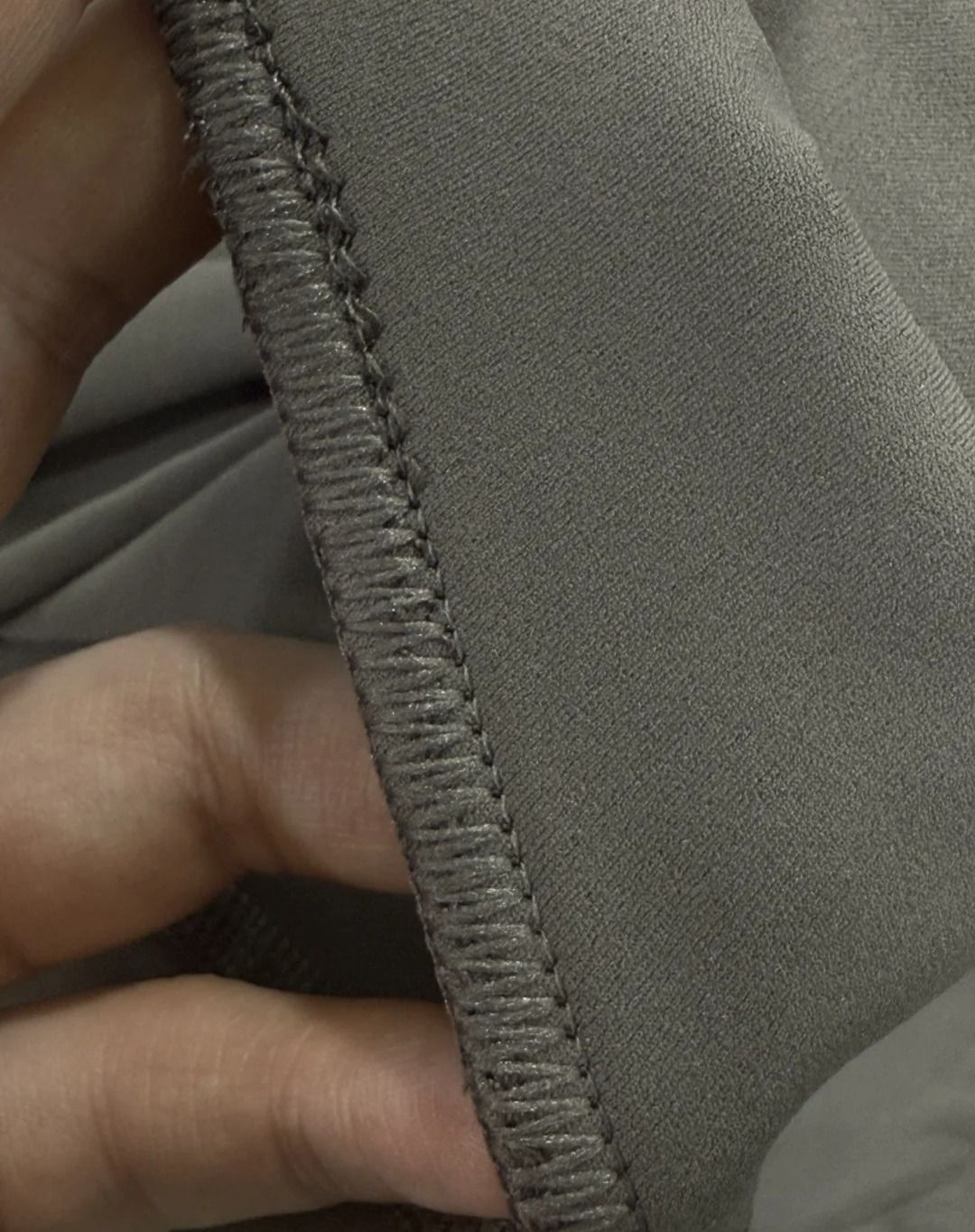
Turn a garment inside out and most of the answers are there.
Fabric names get most of the attention on a product listing. Construction gets almost none, which is unfortunate, because construction is where training clothes succeed or fail. Turn a garment inside out for thirty seconds and you can read most of it.
Overlock Versus Flatlock
An overlocked seam is the standard one: two edges wrapped together in a loop of thread that stands up from the surface like a small ridge. It is fast to sew and it is fine on the outside of a garment, but against skin under a strap or a bench it becomes a pressure point.
A flatlock seam joins two panels edge to edge, with the stitching spread across the join so the seam lies level with the fabric on both faces. You can identify one by touch: run a finger along the inside and a flatlock feels like a texture change rather than a ridge. On a top you will wear under a bag strap, that difference is the whole story.
Where the Shoulder Seam Sits
Hold the top up and find the shoulder seam. If it lands exactly on the point of the shoulder, the sleeve is set for a static garment. If it sits slightly inboard, that is a raglan influence or a dropped shoulder, and it changes where the fabric folds when you reach. Neither is wrong, but a seam directly under where a strap sits will be felt eventually.
The Gusset
Look at the crotch of a pair of joggers from the inside. If four seams converge at a single point, all the load from a squat or a stride concentrates there. If there is a diamond or triangular panel set into that junction, the load spreads across the panel's edges instead. A gusset also widens the range of motion available before the fabric runs out, which is why it appears on climbing and training pants and rarely on ordinary trousers.
Waistband Anatomy
Three constructions turn up. A drawcord alone gives a clean line and loosens steadily through a session. Elastic alone holds well until it has stretched, at which point there is no adjustment left. Elastic and drawcord together keep the band under tension while giving you a way to reset it, which is why it is the one worth looking for.
Check the width too. A very narrow band concentrates pressure into a line, and a very wide one folds over when you hinge. Somewhere in the middle sits flat through a full range of movement.
Hardware and Finishing
Cords should have proper tipped ends rather than heat-sealed stubs that fray after a few months. Pocket bags should be stitched into the side seam rather than hanging free, or they twist. Zippers, where they exist, should run without catching when the garment is held slack rather than pulled tight.
None of this takes expertise, just the habit of turning things inside out before deciding. It is the same set of checks behind what we carry, described in more detail on our About Us.
Thank you for shopping with us, and for the work these clothes get packed for.
Updating…